Understanding De Quervain’s Tenosynovitis: Causes and Treatment Options
A sharp or aching pain at the base of the thumb, particularly when forming a fist, grasping objects, or turning the wrist, is a frequent clinical complaint. Often, these symptoms point to a condition known as De Quervain’s tenosynovitis(sometimes colloquially referred to as “smartphone thumb” or “mummy’s thumb”).
This condition involves painful inflammation of the specific tendons that control thumb movement. Left unmanaged, it can significantly restrict your hand functionality. Understanding the anatomy, risk factors, and available medical treatments can help you seek timely care.
Clinical Symptoms of De Quervain’s Tenosynovitis
Symptoms generally present localized to the thumb side of the wrist and can appear either gradually or suddenly. Common signs include:
- Pain Near the Base of the Thumb: This is the primary symptom and may travel up the forearm. The pain typically worsens during activities that involve thumb and wrist movement.
- Local Swelling: Visible swelling or fluid accumulation over the thumb side of the wrist.
- A “Snapping” Sensation: A catching or snapping feeling when moving the thumb.
- Difficulty Gripping: Reduced strength when attempting to pinch, grasp, or wring objects due to discomfort.
What Causes De Quervain’s Tenosynovitis?
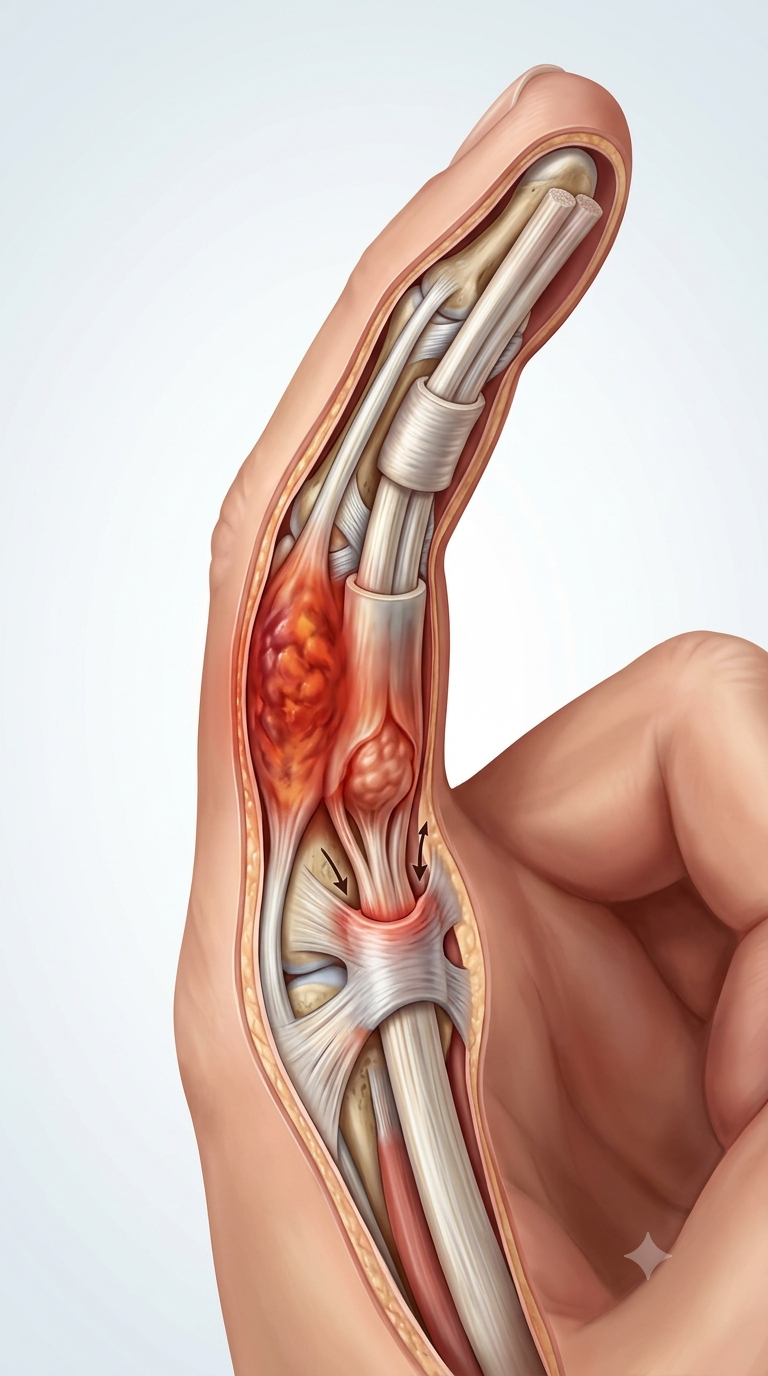
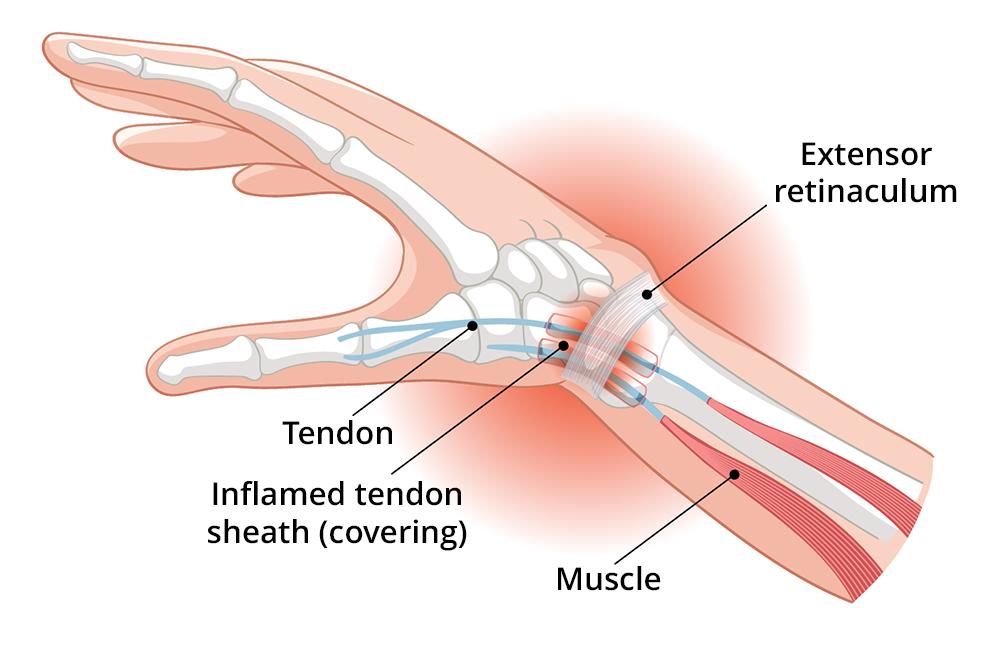
The tendons that extend the thumb pass through a narrow tunnel (compartment) on the side of the wrist. These tendons are encased in a slippery synovial sheath that allows them to glide smoothly.
When you perform repetitive hand or wrist motions, the sheath can become irritated and inflamed. This causes the sheath to thicken, constricting the tunnel and compressing the tendons. Every time the thumb moves, the friction causes pain.
Common Risk Factors
- Repetitive Wrist Motion: Tasks involving repetitive lifting, typing, wringing, or heavy smartphone use.
- New Mothers and Caregivers: Repetitive lifting of an infant using the thumbs as leverage places unique mechanical stress on these tendons.
- Co-existing Conditions: Individuals with a history of rheumatoid arthritis or direct wrist trauma are more susceptible.
- Demographics: It is more commonly observed in women and individuals between the ages of 30 and 50.
Clinical Treatment Options at Gryphon Medical
Medical management aims to relieve the inflammation, preserve joint mobility, and prevent recurrence. At Gryphon Medical, our physicians perform a clinical assessment—often including a physical diagnostic maneuver known as the Finkelstein test—to verify the condition and advise on an appropriate pathway.
1. Conservative Management
For early-stage or mild symptoms, non-invasive strategies focus on resting the affected structures:
- Splinting: Utilizing a specialized splint called a thumb spica splint. This immobilizes the thumb and wrist, allowing the inflamed tendons to rest.
- Activity Modification: Identifying and temporarily avoiding the repetitive movements that trigger the pain.
- Oral Anti-inflammatories: Non-steroidal anti-inflammatory drugs (NSAIDs) may be prescribed to manage acute pain and reduce swelling.
2. Corticosteroid Injections
For moderate to persistent cases where splinting and rest do not yield sufficient improvement, corticosteroid injectionsare a well-established, non-surgical clinical option available at our clinic.
- Mechanism: A localized corticosteroid injection is administered directly into the inflamed tendon sheath (the first dorsal compartment of the wrist).
- Clinical Effect: The corticosteroid delivers a powerful anti-inflammatory effect precisely where the swelling occurs, opening up the constricted tunnel.
- Efficacy: This minor procedure takes only a few minutes in the clinic. Most patients experience a significant reduction in pain and swelling within a few days, often leading to full symptom resolution.
3. Minor Surgical Release
In chronic or severe cases where the tendon sheath has permanently thickened and failed to respond to conservative or injection therapies, surgical intervention may be required.
- Procedure: A minor surgical procedure (De Quervain’s release) can be evaluated. Performed under local anesthesia, the physician makes a small incision to carefully divide the roof of the tight tendon compartment. This permanently widens the tunnel so the tendons can move without friction.
Clinical Overview of Treatment Pathways
| Clinical Severity | Typical Presentation | Management Options | Expected Outcome |
| Mild | Intermittent pain when lifting or pinching, mild tenderness | Splinting (Thumb Spica), rest, oral anti-inflammatories | Gradual symptom relief over weeks |
| Moderate | Persistent ache, swelling, difficulty performing daily tasks | Targeted Corticosteroid Injection | Rapid reduction of inflammation and restored mobility within days |
| Chronic / Fixed | Constant pain, noticeable tendon snapping, thickening | Evaluation for Minor Surgical Release | Surgical decompression to permanently free the tendon |
Consulting a Doctor
Allowing tendon inflammation to persist without intervention can lead to chronic scar tissue formation, which may complicate recovery. Early clinical evaluation ensures access to effective non-surgical options like targeted corticosteroid injections.
If you are experiencing persistent thumb or wrist pain, you may visit Gryphon Medical at our Bedok clinic for an accurate diagnosis and treatment plan.
Need an evaluation for wrist or thumb pain? Please contact Gryphon Medical to book a consultation with our medical practitioners at our Bedok clinic.